2027 Ford E-Transit Release Date, Specs, Dimensions
2027 Ford E-Transit Release Date, Specs, Dimensions – The 2027 Ford E-Transit arrives as the most extensive update to Ford’s electric work van since its introduction, signaling a clear leap toward a more efficient and higher-performing EV platform. Ford redesigns the E-Transit with a stronger modular chassis engineered specifically for commercial EV demands. This update allows the van to accommodate larger battery packs, heavier payloads, and new power management systems. The redesigned underbody structure increases rigidity while lowering the center of gravity, improving stability whether fully loaded or navigating tight delivery routes.
A major part of Ford’s update plan focuses on expanding the E-Transit’s lineup. For 2027, the van is offered in multiple wheelbases, three roof heights, and new body variations including a cutaway and cab-chassis configuration. These additions make the E-Transit more adaptable for upfitters and fleet customization. Ford’s commercial division worked closely with businesses to understand loading requirements, cargo volume needs, and charging expectations to ensure the 2027 redesign directly addresses common real-world challenges. Every configuration supports enhanced thermal management, ensuring the vehicle operates reliably in extreme heat or cold. 2027 Ford E-Transit Release Date
2027 Ford E-Transit Redesign and Update Plan
Exterior & Interior
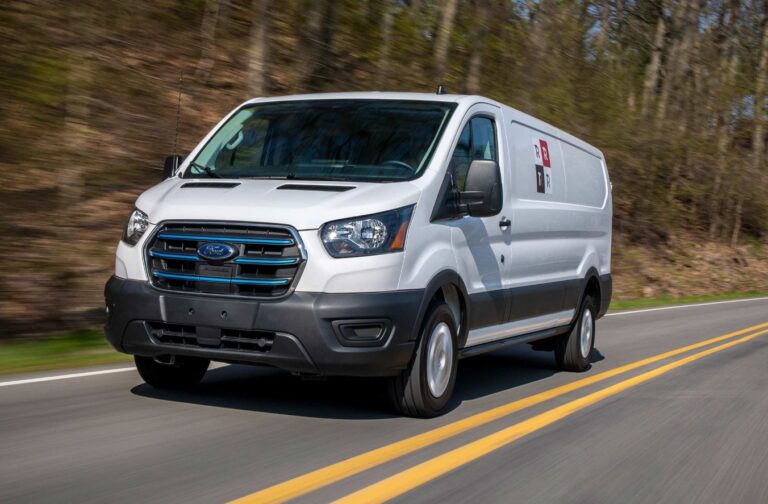
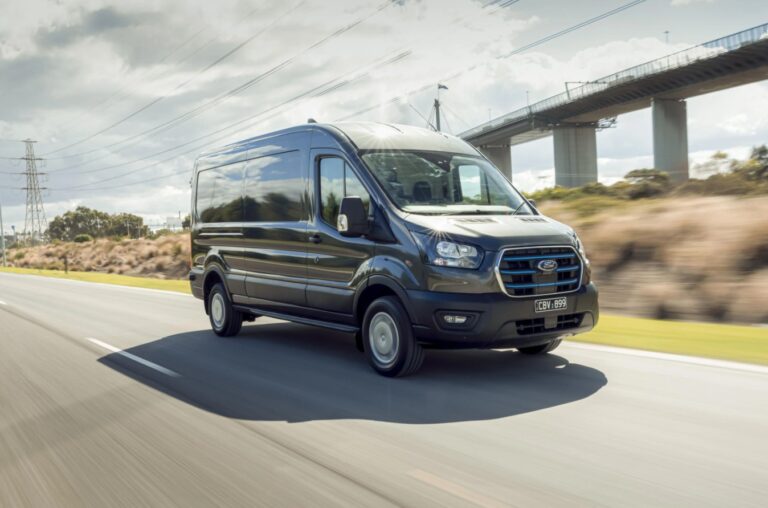
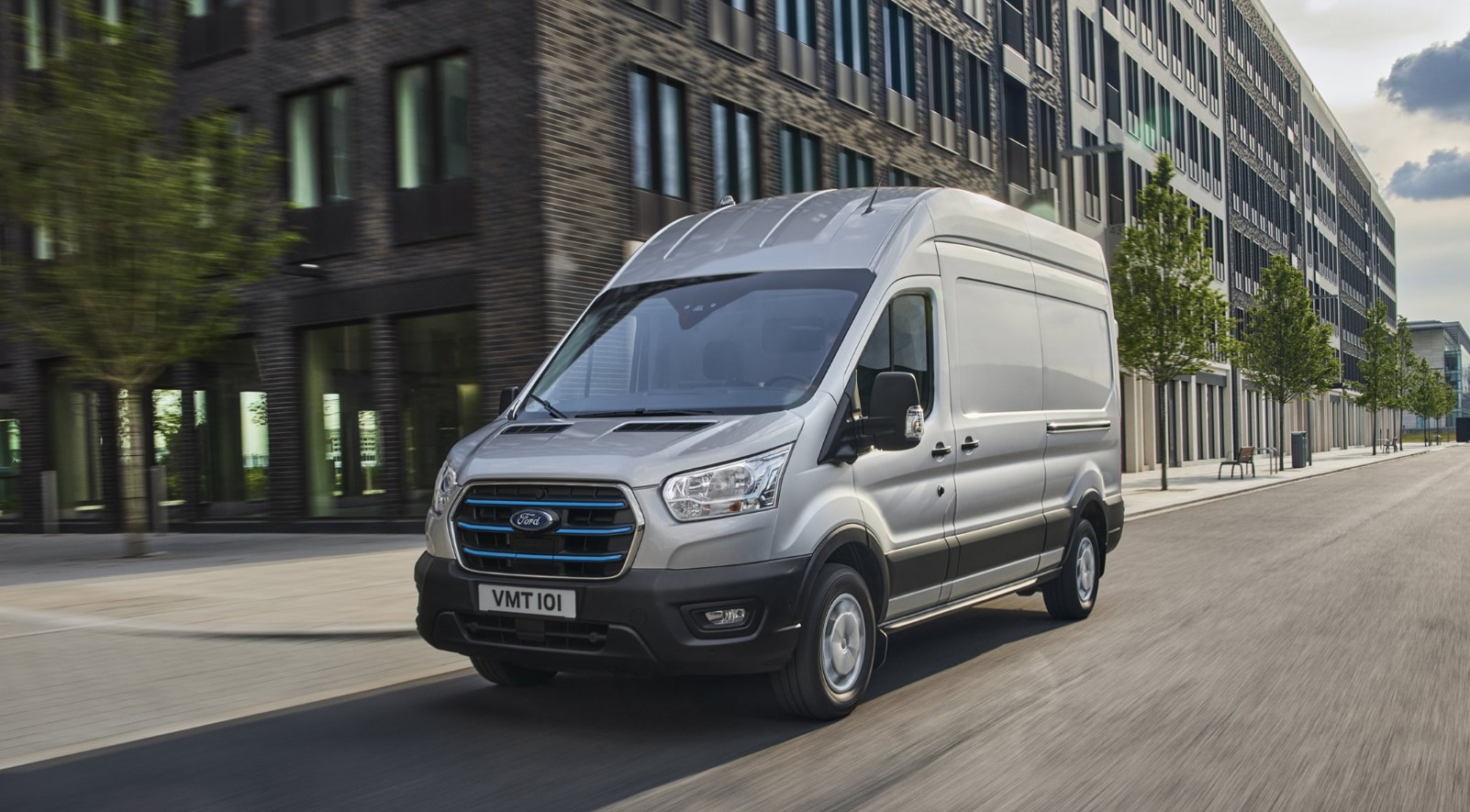
The exterior of the 2027 Ford E-Transit maintains the familiar Transit silhouette while introducing streamlined styling and functional aerodynamic tweaks to boost range. The front fascia features a smoother grille panel hiding advanced cooling shutters, designed to open only when required to regulate motor and battery temperatures. LED headlights are now standard, and Ford added reinforced bumper structures to better withstand urban fleet wear. The side body panels use a more durable composite mix, helping minimize dents and surface damage from daily operations. Optional dual sliding doors improve loading flexibility for parcel delivery services.
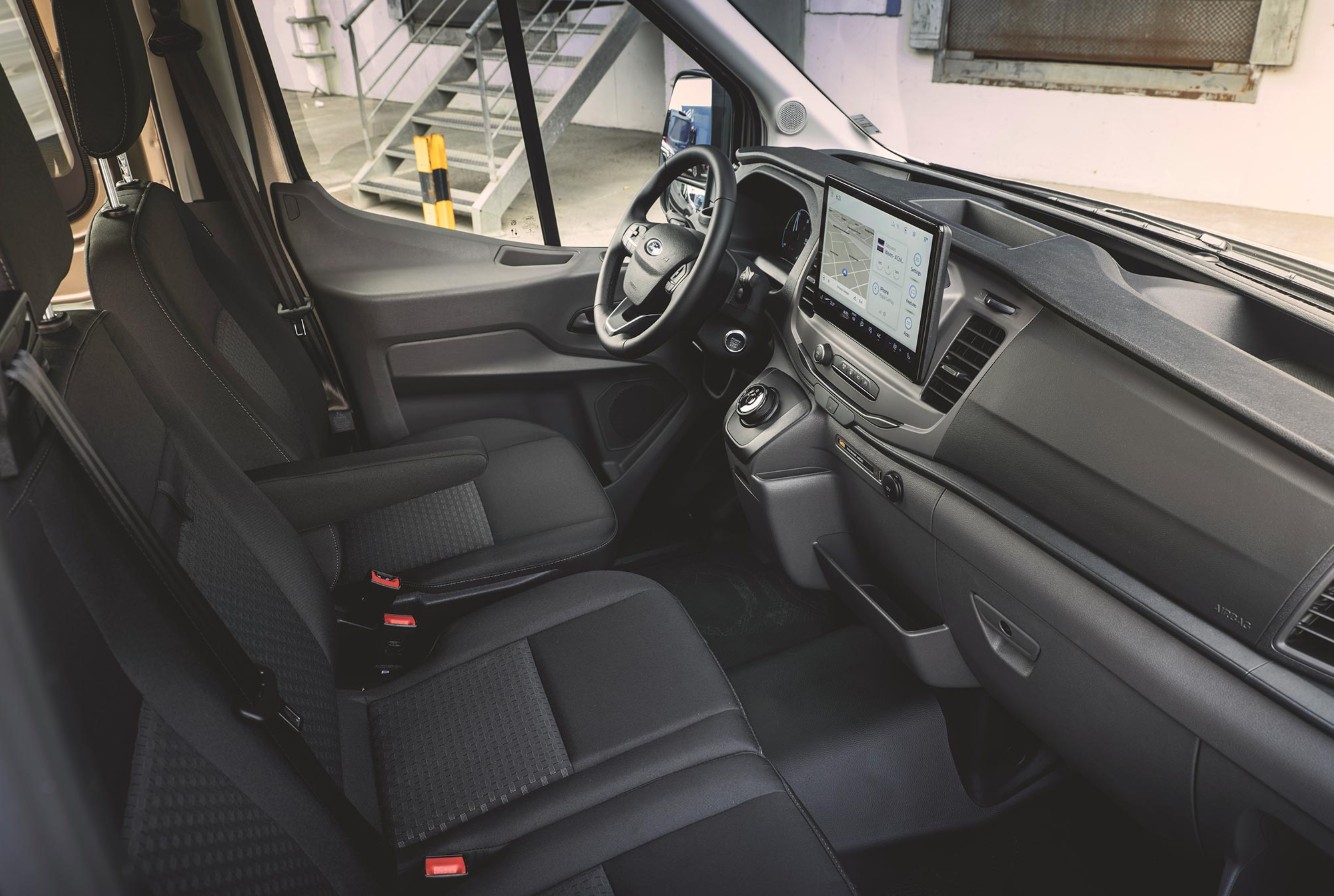
Inside, Ford transforms the cabin into a much more efficient and comfortable workspace. A new digital dashboard combines a 12-inch instrument cluster with a 13-inch center display running Ford’s latest fleet-optimized SYNC software. The interface prioritizes routing, real-time energy usage, and vehicle diagnostics, reducing the need for handheld devices and external navigation tools. Materials throughout the cabin are upgraded to handle heavy-duty use—reinforced seat fabrics, rubberized floor coverings, and wipe-clean panels make maintenance easy. Driver ergonomics receive major improvements with more adjustability, increased storage, and a more upright seating position intended for long shifts.
The cargo area benefits from a flatter load floor thanks to a redesigned battery housing. Ford widened the interior walls to maximize usable space and added more integrated mounting points for shelving, racks, and custom commercial upfits. Enhanced LED cargo lighting improves visibility for nighttime work. Passenger versions of the E-Transit introduce more comfortable seating and upgraded rear climate control systems, making the van more appealing for shuttle and mobility service applications. The overall cabin and cargo redesign blend practicality, technology, and durability, covering the needs of diverse businesses.
Ford continues tightening the integration between hardware and software on the 2027 E-Transit. Over-the-air updates now cover not only infotainment and driver-assist systems but also charging behavior, motor efficiency, and overall energy management strategies. This deeper software connectivity is part of Ford’s long-term fleet ecosystem strategy. The redesign is not just a cosmetic or mechanical update—it is a complete refinement of how electric commercial vans function, interact with operators, and stay productive throughout the workday.
2027 Ford E-Transit Specs
Engine & Performance
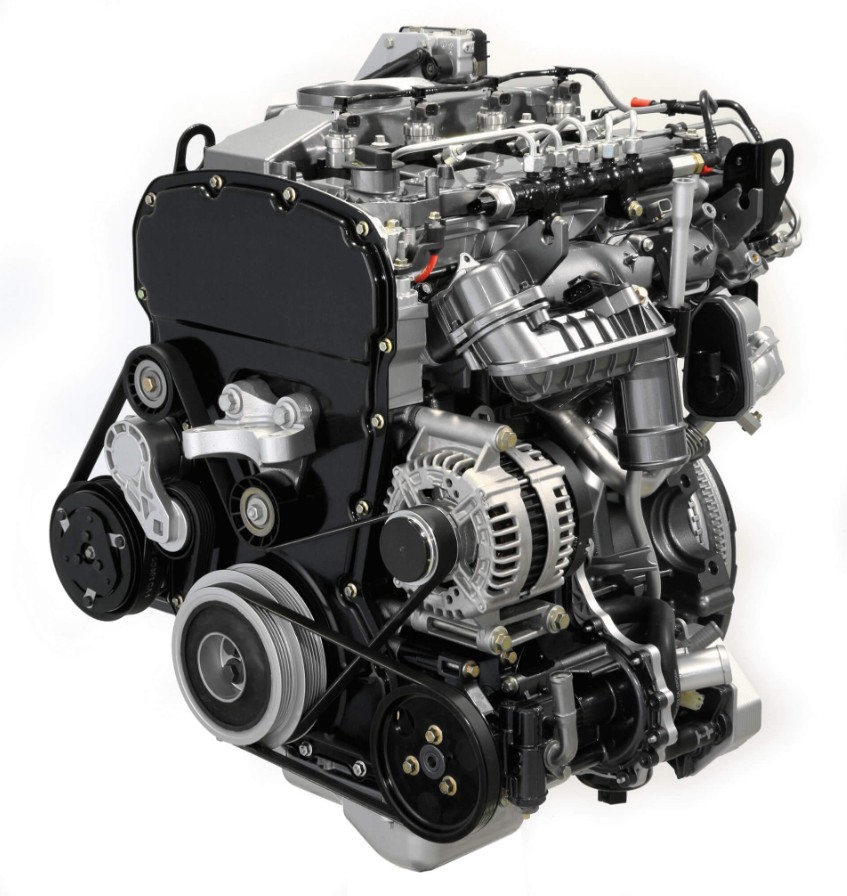
Ford equips the 2027 E-Transit with an upgraded electric powertrain that significantly improves range, torque, and charging efficiency. The new generation rear-drive electric motor produces stronger torque output, offering quicker launches when fully loaded and more confidence when merging onto highways. Range increases noticeably thanks to a redesigned battery pack available in multiple capacities, allowing fleet managers to match energy storage to their daily route demands. The largest battery option is engineered for long-distance delivery operations, while smaller packs suit urban fleets prioritizing charging speed and cost.
Charging performance is another major improvement for 2027. The E-Transit supports faster DC charging speeds, reducing downtime between shifts. With a capable fast charger, the van can regain a substantial portion of its range in a coffee-break window, allowing operators to keep the vehicle active throughout the day. Ford’s regenerative braking system is re-tuned for smoother operation and more effective energy recapture, especially during stop-and-go city driving. Improved power electronics and battery thermal controls allow the van to maintain peak efficiency across a wider temperature spectrum.
On the road, the 2027 E-Transit delivers a more refined driving experience. A newly calibrated suspension improves ride quality, reducing vibrations when traveling over uneven roads or construction zones. The steering system provides better feedback, and the low center of gravity gives the van secure handling even when stacked with tools or cargo. Payload capacity increases because Ford optimizes battery weight distribution and updates the rear axle to handle more load. Whether used for last-mile delivery, trades, or passenger transportation, the updated performance makes the E-Transit more capable and predictable under daily commercial stress. 2027 Ford E-Transit Release Date
2027 Ford E-Transit Fuel Economy
Range improvements are one of the largest upgrades for the 2027 Ford E-Transit. Depending on configuration and battery choice, the van is expected to deliver significantly more miles per charge than earlier versions. Ford’s goal is to support both short-distance city fleets and longer-route commercial operations with flexible battery options. The improved power management system helps maintain consistent range figures even in cold weather or under heavy payload conditions, a challenge earlier EV vans struggled to overcome.
Charging takes a major leap forward with compatibility for next-generation fast-charging networks. The 2027 E-Transit’s upgraded charging architecture supports higher amperage levels, drastically reducing downtime. Fleet depots can install optimized AC and DC charging solutions specifically designed for shift-based operations. Smart-charging software helps operators schedule charging windows, predict energy costs, and maintain battery health over longer lifespans. For businesses with multiple vehicles, the system can balance energy distribution across the fleet automatically.
2027 Ford E-Transit Safety Features
Ford expands the 2027 E-Transit’s safety suite extensively to keep up with evolving commercial standards. Standard equipment now includes automatic emergency braking, lane-keeping assist, blind-spot alerts, and a newly enhanced front collision mitigation system tuned for urban driving. The van also introduces an upgraded 360-degree camera system that provides clearer views in tight alleyways, loading docks, and high-traffic parking areas. Many fleets rely on varied driver experience levels, so Ford upgrades these systems to function seamlessly and offer more consistent protection.
The structural improvements for 2027 add another layer of safety. Ford strengthens the body frame around the battery compartment to provide superior impact absorption from multiple directions. Reinforced side panels, improved door beams, and additional crumple zones help the E-Transit meet stringent global crash regulations. Passenger variants feature extended side-curtain airbags and improved seat anchoring for added occupant protection. High-voltage electrical systems incorporate automatic shutoff features in the event of a collision, reducing risk for drivers, passengers, and first-responders.
On the technology side, the 2027 E-Transit integrates deeply with Ford Pro’s fleet management ecosystem. Fleet operators can monitor vehicle health, charging cycles, driver behavior, route efficiency, and upcoming maintenance schedules—all from a centralized dashboard. The van’s telematics system sends data in real time, helping businesses cut operating costs and minimize downtime. Over-the-air software updates help the E-Transit evolve throughout its service life, optimizing energy usage, expanding safety capabilities, and improving system performance without requiring a shop visit. 2027 Ford E-Transit Release Date
2027 Ford E-Transit Release Date & Price
Pricing for the 2027 model will vary based on roof height, wheelbase, powertrain output, and battery size. Entry-level cargo models are expected to start in the mid-$50,000 range, while high-capacity and passenger variants will command a higher premium. Despite the upfront EV price difference, Ford focuses heavily on long-term savings through reduced fuel costs, simpler maintenance needs, and better uptime. The official release date is projected for late 2026, with wider availability for fleet customers beginning early in 2027.
Conclusion
The 2027 Ford E-Transit arrives with major upgrades in range, performance, safety, and overall capability. Ford refines every aspect of the van to meet the growing demands of modern fleet operations, delivering a commercial EV that is faster, more efficient, more durable, and more connected. With its expanded configurations, smarter charging systems, and improved powertrain engineering, the 2027 E-Transit stands ready to lead the electric work-van segment and provide businesses with a reliable, future-proof solution for years to come.
Note: Much of the information in this blog post is based on materials that were available before the product was even released. Call your local dealership or consult official sources if you want up-to-date information.